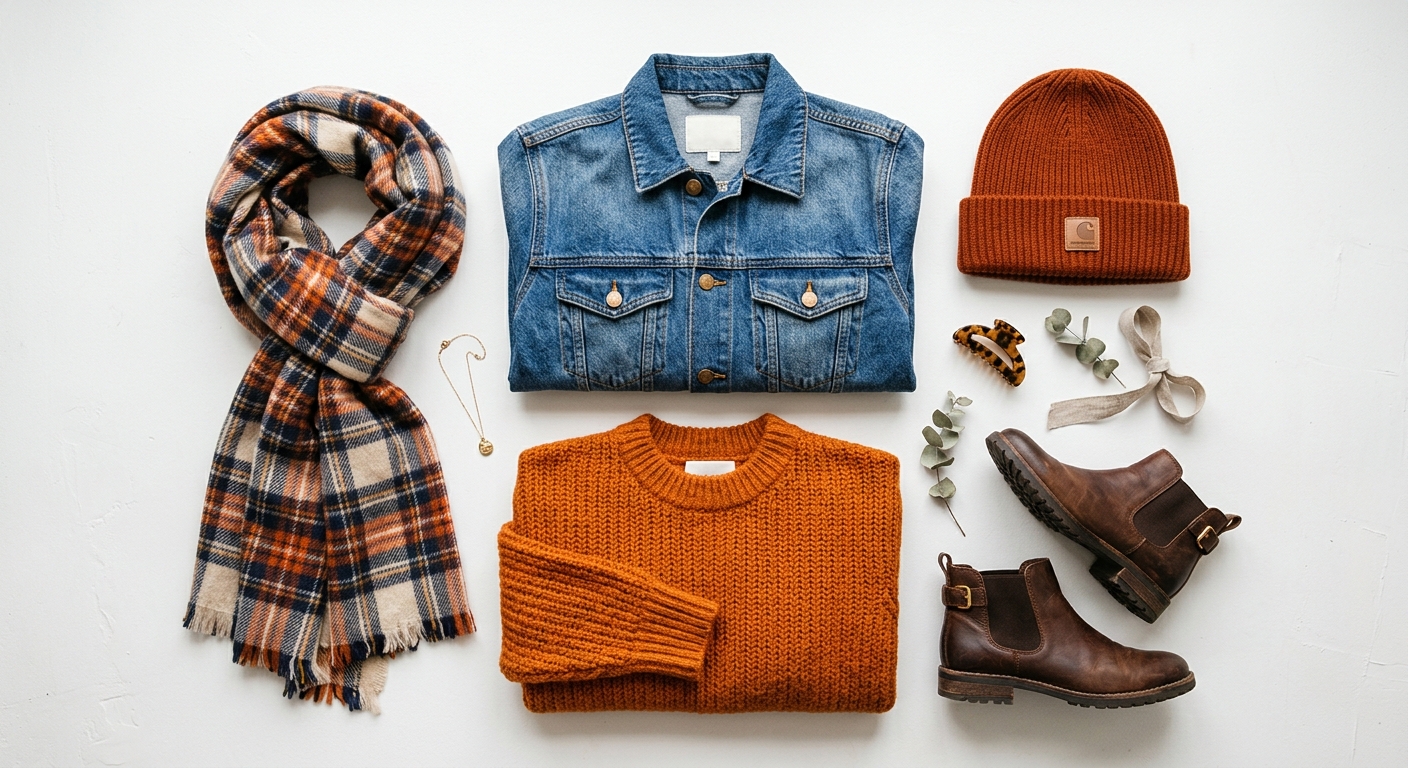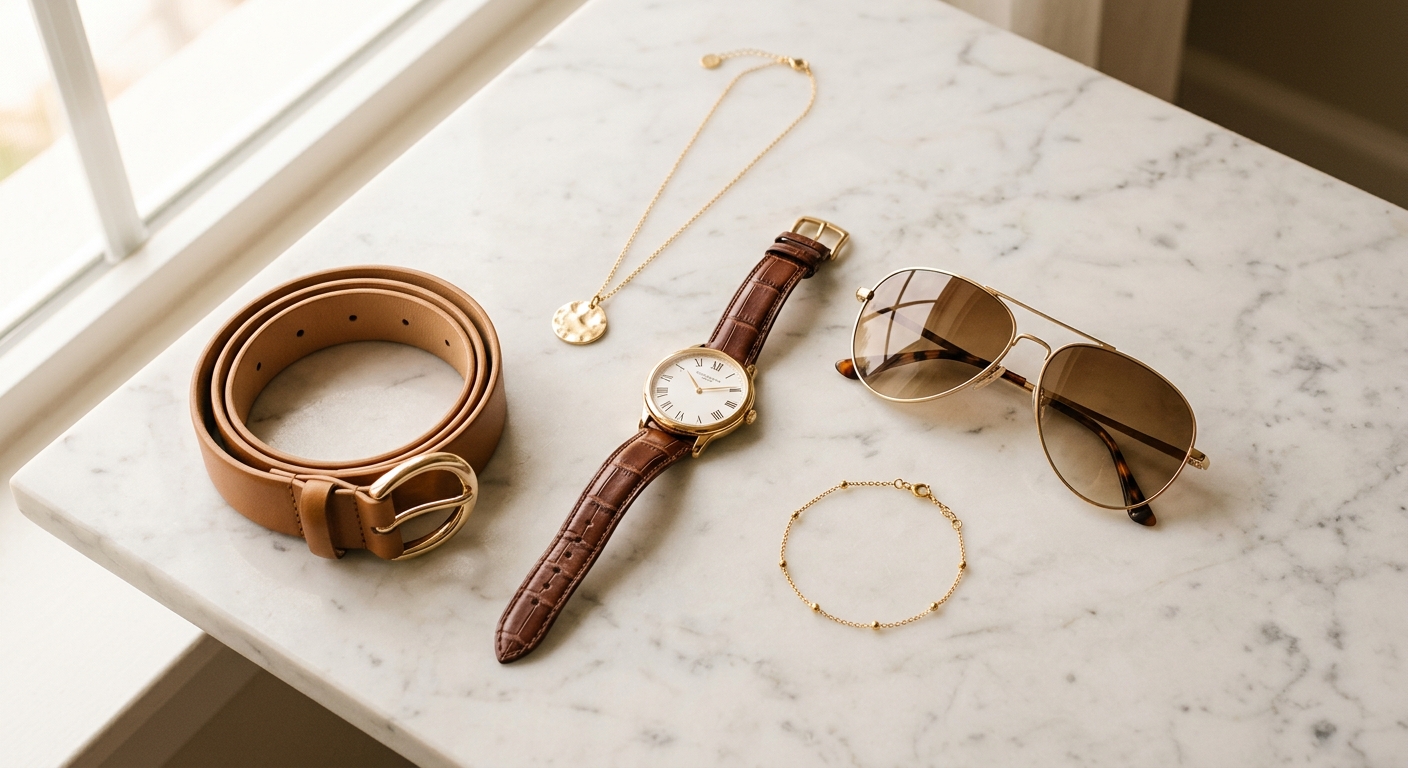
Accessories are the difference between getting dressed and getting styled. The right watch, belt, or necklace can elevate a basic outfit into something memorable. But choosing accessories is not about buying more — it is about understanding balance, proportion, and context. This guide breaks down the principles that make accessorizing intuitive rather than overwhelming.
The Rule of Balance
Every outfit has a visual weight. A structured blazer carries more weight than a flowy blouse. Dark colors weigh more than light ones. The goal with accessories is to either match that weight or intentionally contrast it.
Matching Weight
If your outfit is structured and tailored — think a blazer with trousers — choose accessories with similar structure: a leather belt, a metal watch, architectural earrings. A delicate chain necklace will disappear against heavy fabrics.
Intentional Contrast
If your outfit is soft and flowy, a structured accessory creates visual interest. A chunky cuff bracelet with a silk dress, or a wide leather belt over a lightweight cardigan, adds definition without competing.
Proportion Matters More Than Price
A well-proportioned accessory from a budget brand looks better than a poorly proportioned one from a luxury house. Here are the proportion rules that actually matter:
- Earrings: If your hairstyle covers your ears, skip earrings or choose small studs. If your hair is pulled back, larger earrings work.
- Necklaces: The pendant should sit at the collarbone for V-necks, higher for crew necks. Layering works only when each chain is a different length.
- Belts: Wide belts for dresses and long tops. Thin belts for trousers and high-waisted skirts.
- Bracelets: One statement piece per wrist. Stacking thin bangles works, but mixing thick and thin on the same arm looks cluttered.
Color Pairing Without Overthinking
You do not need a color wheel to accessorize well. Follow these three approaches:
1. Match Your Metals
Gold with gold, silver with silver. Mixing metals can work, but it requires intention — usually a two-tone piece that bridges them. When in doubt, keep it uniform.
2. One Pop of Color
If your outfit is neutral, one colorful accessory — a red bag, turquoise earrings, a patterned scarf — becomes the focal point. Two colorful accessories compete and dilute the effect.
3. Texture as Color
When you want a monochrome look, mix textures instead of colors. A suede belt with a leather bag in the same brown tone creates depth without contrast.
Context: Where You Are Going Matters
Accessories that work for a weekend brunch do not necessarily work for a client meeting. Here is a quick framework:
Workplace
Stick to classic pieces: a watch, one ring, stud earrings, a leather belt. Save statement pieces for after hours. If you want to learn more about building a versatile wardrobe for different contexts, read our guide on essential wardrobe pieces.
Casual Outings
This is where you can experiment. Layered necklaces, stacked rings, colorful scarves, and sunglasses all belong here.
Evening Events
Choose one statement piece — either earrings or a necklace, not both. A clutch instead of a tote. Heels that complement, not compete with, the outfit.
The Five Accessories Everyone Should Own
Before buying trend-driven pieces, make sure you have these fundamentals:
- A quality leather belt in black or brown that fits your most-worn trousers
- A simple watch with a neutral face and metal or leather band
- Stud earrings in a metal that matches your other jewelry
- A versatile handbag that works for both day and evening
- Sunglasses that fit your face shape and offer UV protection
These five pieces cover 80% of accessorizing needs. Everything else is personal expression.
Common Accessorizing Mistakes
- Wearing every accessory you own at once — edit down before leaving
- Choosing accessories before the outfit — always start with clothing
- Ignoring shoe choice — shoes are accessories too, and they anchor the look
- Forgetting about functionality — if your bag cannot hold your essentials, it is not the right choice
Final Thoughts
Accessorizing is a skill, not a talent. The more you practice the principles of balance, proportion, and context, the more intuitive it becomes. Start with the fundamentals, experiment gradually, and remember that confidence is the best accessory you can wear. For more fashion guidance, visit our blog.